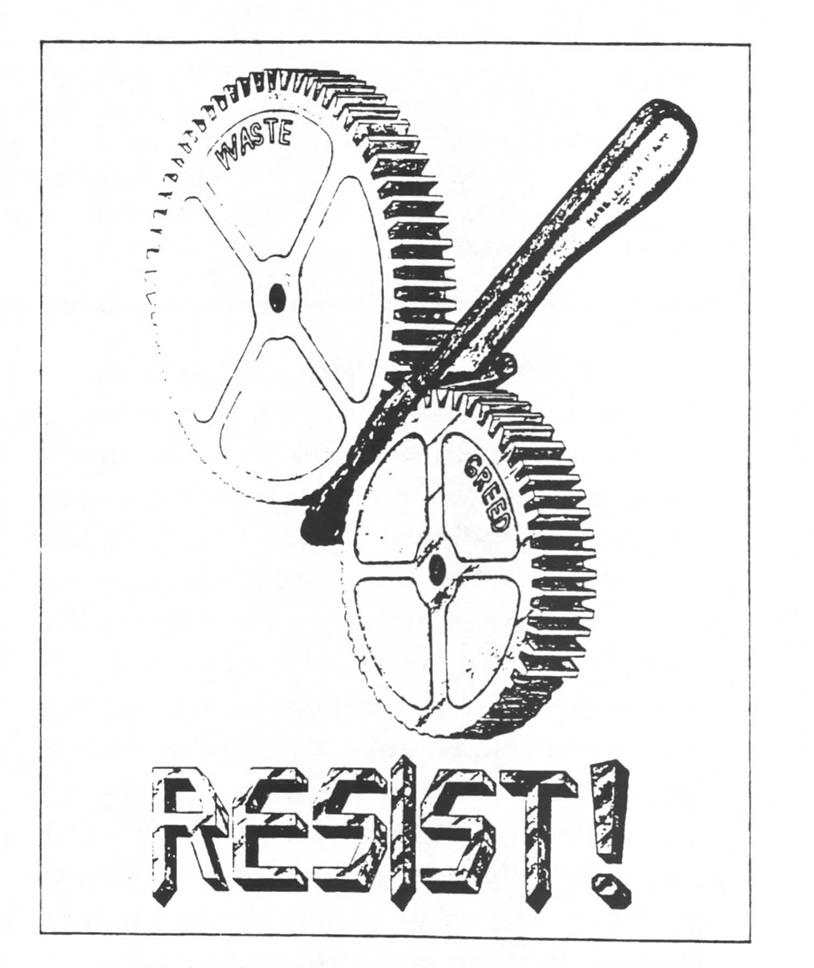
We must take back our free time. Flooded with the crushing sense that a prosperous and hopeful future is eluding our grasp, we are stripped of our free time while we lose the cognitive and political tools needed to reclaim it.
In its ideal form, free time is the realm of leisure. We can define leisure as a self-reflexive state of mind, entered voluntarily and valued for its own sake. However, true leisure has essentially lost its meaning and been replaced by economically leveraged, screen-mediated idleness.
A political-economic order has suffocated it: an order that, in pursuit of extracting as much value as possible from every facet of society, reduces our time and attention to a tradable commodity powering capitalism’s death drive. Even so, there is hope that we can understand and overcome the suicidal flows of capital and return to a spiritual and creative notion of work in society.
B
The “American Dream” was once intertwined with the promise of free time. It envisioned a nation where citizens, liberated from the hierarchies of the Old World, would have the freedom to cultivate adventures of the mind and spirit. The labor and spiritual movements of the 19th and 20th centuries understood societal progress as winning more free time, made possible as technology solved the problem of our essential material sustenance. This era, lasting until the mid-20th century, was a high point for books and centers studying leisure, and optimism about shorter hours was widely held. However, technology that had initially promised salvation from the drudgery of work brought further bondage.
Other developments hastened the turn toward maximum production and the cult of consumerism. At the turn of the 20th century, Frederick Taylor developed scientific management. It greatly increased production efficiency by prompting managers to analyze workers’ tolerance points and the optimal movements and time needed for a given task in ever-smaller increments. Taylorism accelerated the deskilling of labor and potentiated surplus value extraction, widening the gap between a worker’s true value and their wage.
These methods exacerbated the overproduction of goods that, coupled with intense financial speculation and myriad other factors, collapsed the economy in 1929. The Great Depression that followed was deepened by the Smoot-Hawley Tariff Act and the trade war it triggered. As productivity fell and economic stagnation entrenched itself, the overarching conception of work faced an inflection point.
In 1932, Congress introduced the Black-Connery bill to make the 30-hour workweek the new national standard. When Roosevelt came into power the next year, he supported it at first, but the industrial class feared it, and they, along with his advisers, influenced him to change course. The bill evolved and passed in 1938 as the Fair Labor Standards Act, establishing the 40-hour workweek and stamping out labor’s dream of the 30-hour week. Full Time, Full Employment became the guiding mantra of the recovering US economy.
The New Deal’s utility theorists and industry collaborators narrowed progress to GDP growth, implicitly recognizing the danger that progressively reduced hours would result in reduced authority over the masses, thus discarding the deeper vision of free time as a space for democratic flourishing. Labor and the state, once allies in the struggle for shorter hours, became complicit in the shift, prioritizing job creation over liberation from work. As put by Ivan Illich: “What is right comes to be subordinated to what is good for institutions.”
Concurrently, Edward Bernays (the father of public relations and branding, i.e., consumerist propaganda) manipulated the public into wanting products they didn’t need and reframed the goal of leisure as a moral imperative to consume.
Hustle-grindset culture and its deterministic forefathers (Hegelian and Nietzschean master-slave theorycels, anarchocapitalists, and the rest) conjure a narrative that obscures our collective deskilling, the erosion of curiosity, and the rapid adoption of the rentier economic model. The proletariat is pacified with a simulacrum of leisure. Doomscrolling, binge-watching, stoicism, and other tradbullshit leave us spiritually depleted.
Free time and craftsmanship, work for an end and not work for its own sake, need to be recovered amidst the machine age, or else we will be guided by the technology to also tend toward the average in everything that we do with capital flowing toward the safety of mediocrity and entrenching ourselves in the zone of complacency where we have the means to consume the basics but can’t deduce what is missing.
C
Nearly a century on from the last great depression, we are on the cusp of another downturn, thanks to the suffocatingly thick stupidity guiding the trajectory of the current moment: the illusion of ownership and ego-driven selfishness as the reigning mode of thought, with self-reliance seen as the goal when it’s only the first step. Knowledge and practical, productive work are where building a better society begins.
Work without true value, empowered by AI-induced mediocrity and the need to produce more and create work for its own sake, thus emerges as the collective enemy. The economic actors promoting this societal framework are an extension of the state and capital class, angling to retain and grow the value of their assets while distracting us from reclaiming our right to true progress and our own time.
Degrowth without any counterpoint to balance the reduction of material goods in and of itself is not enough. Universal health care, education, and sustenance within a symbiotic ecological framework are only the start. Open-sourcing the technologies of the latest industrial revolution is crucial. Access to 3D printing with an emphasis on the right to repair and modular, more easily repairable objects will lead us to prosperity and lasting, durable goods that we’d truly own and not just rent. But for leisure and true wealth to be available, a life of action over consumption must be pursued while ensuring we don’t abdicate the power of technology to the market and the state.
Recommended Reading
From most to least directly related.
- Free Time: The Forgotten American Dream, Benjamin Kline Hunnicutt
- The Burnout Society, Byung-Chul Han
- Tools for Conviviality, Ivan Illich
- Democratic Vistas, Walt Whitman
- Now, The Invisible Committee
- Against the Grain: A Deep History of the Earliest States, James C. Scott
- The Dispossessed, Ursula K. Le Guin